

 Français
Online payment in Tunisia: which options should you offer your customers?
“I’ll pay on delivery.” If you sell online in Tunisia, you hear this every day. Yet payment is more than a formality: it affects your conversion rate, your returns and your cash flow. Let’s review the options and how to combine them.
Cash on delivery: the king of Tunisian e-commerce
Cash on delivery (COD) remains the preferred method for most shoppers. The reason is trust: customers see the parcel before paying, and many do not have a card suited to online purchases.
Pros: it removes the main barrier to buying and works for every audience.
Cons:
- refused or unreachable parcels, which cost you the outbound and return trip;
- a payout delay: the money goes through the courier before reaching you;
- cash handling and reconciliation work.
Good news: good practices reduce these drawbacks considerably (see below).
Bank cards
Tunisian and international cards can be accepted through an approved payment gateway connected to a Tunisian bank. The customer pays on a secure page and the money lands in your business account.
- Pros: paid before shipping, no refused parcels, a professional image.
- Cons: onboarding steps (registered business, bank account, gateway contract), per-transaction fees, and some customers are not used to it yet.
e-dinar and mobile wallets
La Poste Tunisienne’s e-dinar card and mobile wallets are now widespread, especially among customers without a traditional bank card. Paying from a phone in a few seconds is becoming natural for a growing share of shoppers, particularly younger ones.
They are ideal for offering accessible online payment alongside cash on delivery.
Bank transfer
Handy for B2B orders or large amounts, transfers are slow and not suited to impulse purchases. Keep them as a secondary option.
Which combination should you choose?
| Your situation | Recommendation |
|---|---|
| Just starting | Cash on delivery + systematic phone confirmation |
| Growing volume | Add online payment (card, e-dinar, wallet) with a small incentive |
| Expensive or custom products | Online deposit, balance on delivery |
| Business customers | Bank transfer on invoice |
5 best practices to secure your payments
- Confirm every order by phone or message before shipping: the most effective way to reduce refusals.
- Show a clear final price, shipping included. A bad surprise at the door means a refused parcel.
- Reward online payment: free shipping or a small discount when customers pay upfront.
- Track your return rates by city, product and ad source to spot problems.
- Demand traceable payouts from your carrier (statements, fixed schedules).
How e-Tijara PRO helps
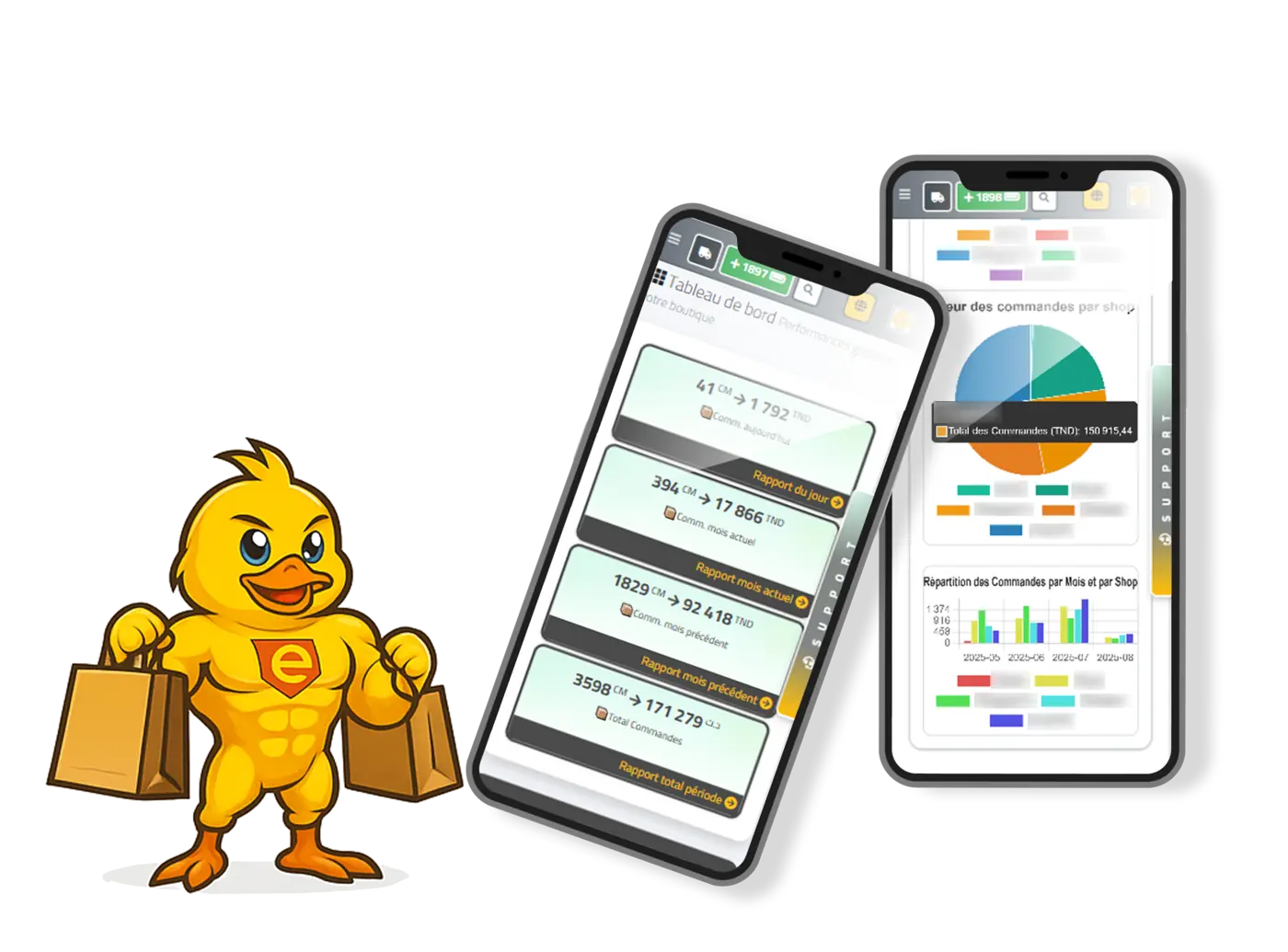
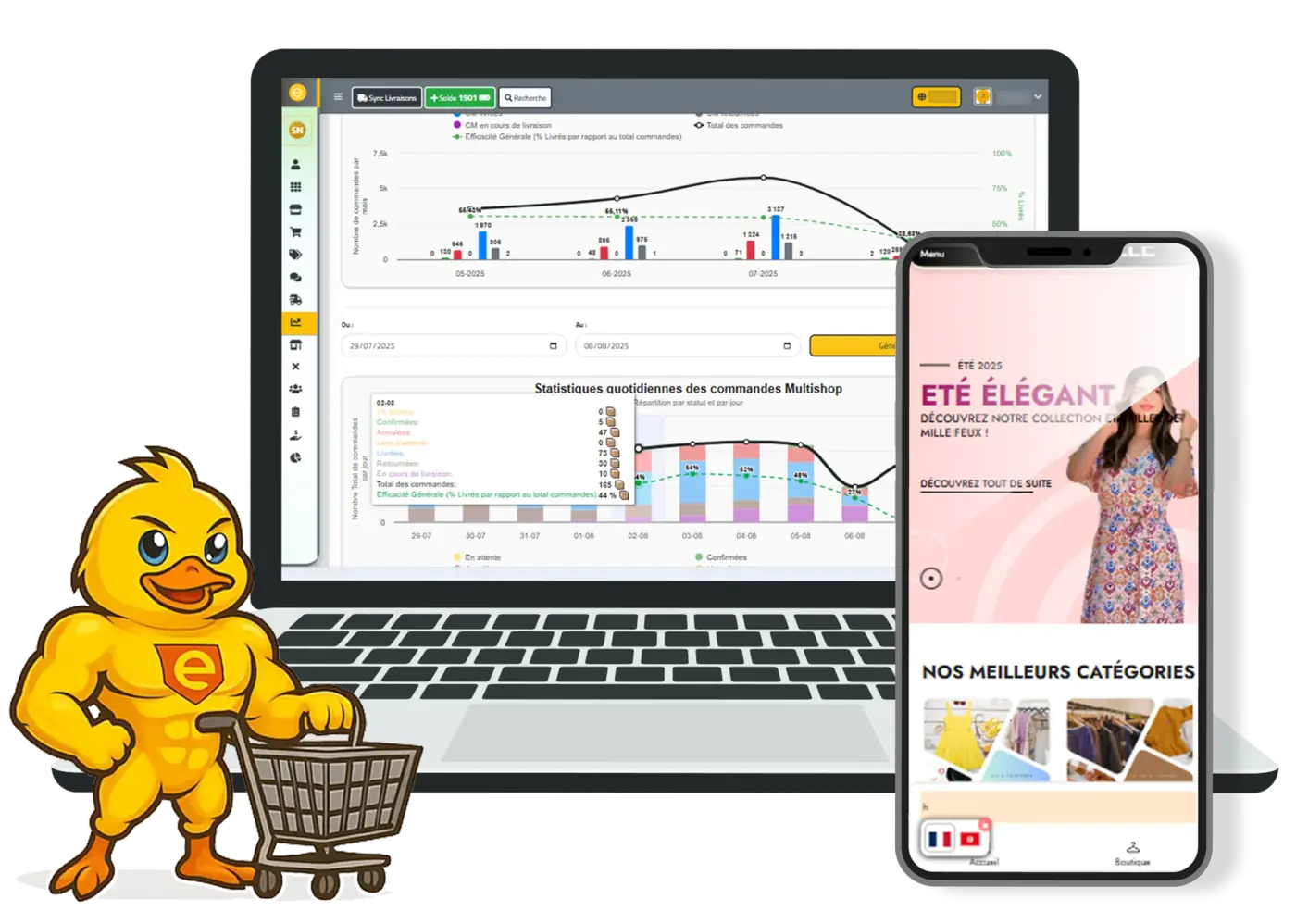
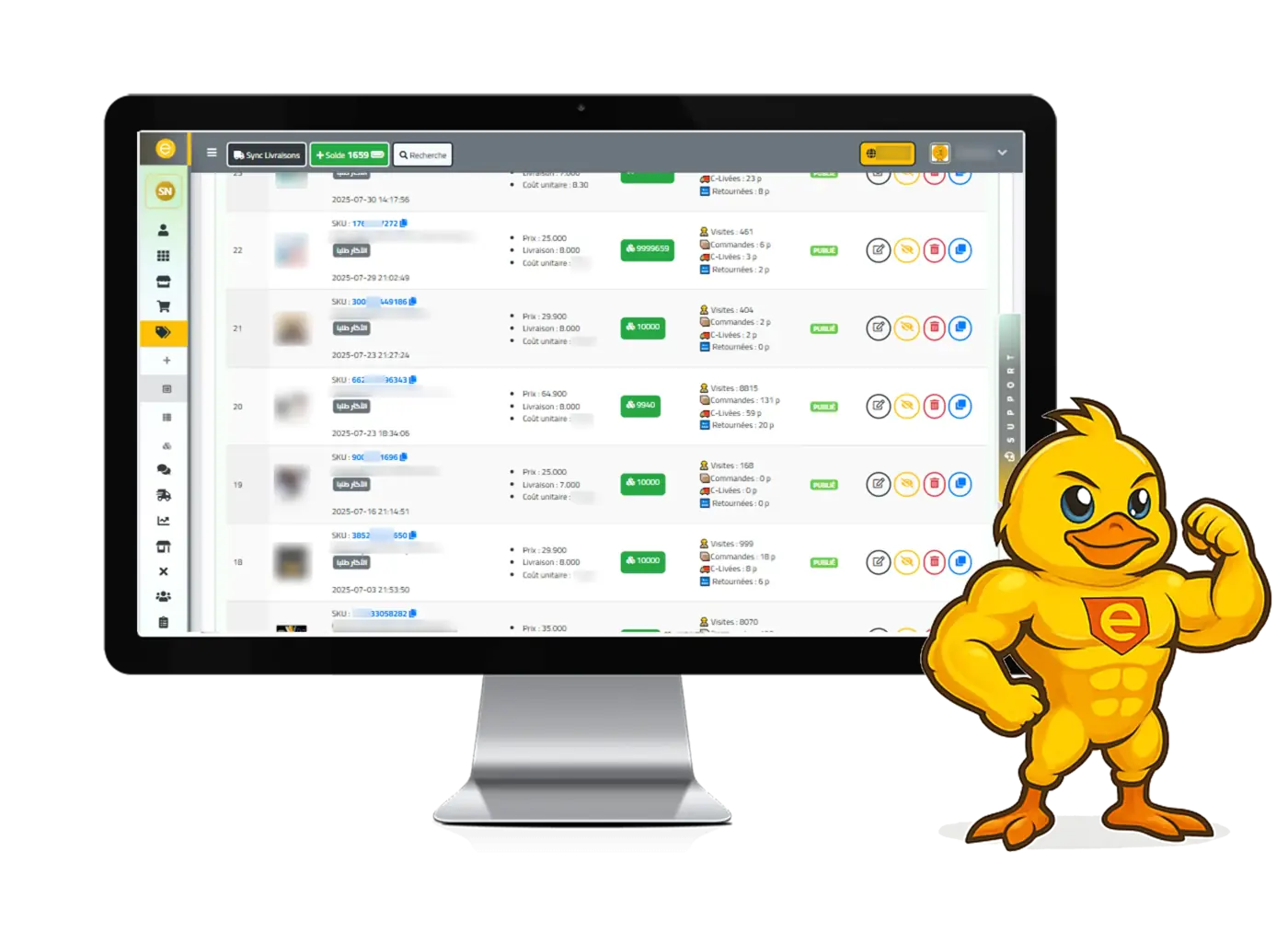
With e-Tijara PRO, every order lands in a clear dashboard with its status (new, confirmed, shipped, delivered, returned), so you instantly see which orders to confirm and which areas are risky. Billing is transparent: one order received = one credit, and abandoned carts cost you nothing. If you want to connect your own online payment solution, our team will review the integration with you.
For your merchant account, top up credits however you like: Tunisian or international card, bank transfer, e-dinar or Tunisian wallets (Flouci…). See the Pricing page.
The right payment method is the one that reassures your customer and protects your margin. Start with well-managed cash on delivery, then gradually open up online payment.
Create your store for free and get 100 free orders to try it.